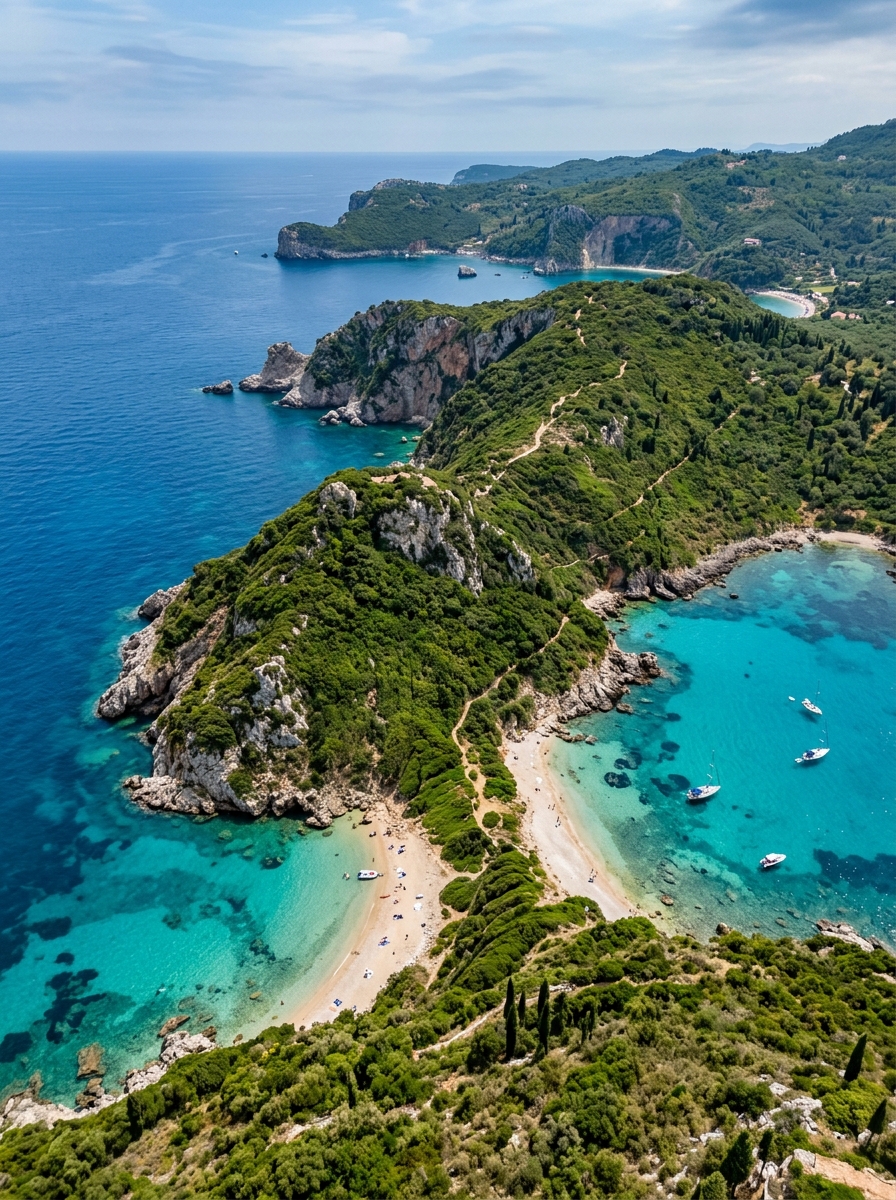
La Grotta in Paleokastritsa is one of the most theatrical natural coves in Greece: a sheer amphitheater of limestone plunging into fourteen meters of cobalt water. Most travelers know it only as a packed cliffside bar reached via 140 steep concrete stairs. The nautical insider’s perspective is entirely different: approaching by private boat from the open Ionian Sea.
The Maritime Approach: Entering the Amphitheater
When you cruise into La Grotta aboard our 40-foot Windy Bora or a licence-free 30 HP self-drive boat, you experience the acoustic and geological power of the cliff wall. The sound of the open sea drops away, replaced by the gentle resonance of swell echoing inside hidden fissures.
The cove's bathymetry is unusually steep. Water depth drops from five to fourteen meters within just twenty yards of the rocky perimeter. This depth allows private yachts to drift comfortably close to the cliff edges without risk of grounding, offering effortless jumps straight from the teak swim platform.
Snorkeling into the Submerged Caverns
Beneath the surface, La Grotta features some of the best underwater visibility in the Mediterranean, regularly exceeding twenty-five meters. Sunlight filtering through the narrow cleft illuminates underwater boulders, moray eel crevices, and schools of bream that congregate around the freshwater upwellings.
- The Main Cavern: Swim forty meters along the northern face into an archway with three meters of overhead clearance. Snorkelers can enter safely in calm morning conditions.
- Cave of Love (Inner Secret): Just south of La Grotta sits the secluded Cave of Love, accessible only to small watercraft and swimmers. The water inside reflects an ethereal violet tone from submerged minerals.
Navigating from our West Coast Base (Glyfada Beach)
Departing from our private operations station at Glyfada Beach, a passage to La Grotta takes approximately twenty-five minutes aboard our flagship motor yacht powered by twin Yanmar 300 HP diesels.
Unlike vessels departing from East Coast marinas in Gouvia or Corfu Town—which must burn nearly two hours circumnavigating the island's rocky northern headlands—our West Coast position provides direct open-water transit. You arrive at La Grotta during morning glass conditions, hours before the afternoon thermal wind stirs the surface.